

Twirl manufactures custom DC gear motors for OEM applications. We adapt proven motor platforms to your required voltage, torque, speed, gear ratio, shaft, mounting flange, encoder and wiring configuration.
Whether you have an existing motor to replace, a sample to match or a new design to develop, our engineering team can review your requirements and recommend a suitable solution.
OEM and ODM projects account for over 95% of the motors we supply.
On this page
- Configuration options
- What we customize
- Product platforms
- Where drives are used
- Manufacturing and quality
- Design review to production
- Questions and quote
Custom Gear Motor Configurations
Most OEM projects start with one or two changes to a proven platform. These are the configuration areas we handle most often; each can be quoted against your drawing, sample or specification. Where a change touches more than one area — a longer shaft that also needs a new flange, for example — we review the whole interface together rather than one part at a time.

Custom Output Shafts
Hex, D-cut, keyway, splined or hollow shafts, with the length, diameter and material to match your coupling. Shaft dimensions and rear extensions are reviewed against your drawing to ensure compatibility with the coupling, bearing load and available assembly space.
Typical need: replace an existing shaft without redesigning the coupling.

Custom Mounting Flanges
Square, round, two-ear and multi-hole flanges, including hole pattern, pilot diameter and material. Flange shape is the part that decides whether the unit drops into your bracket without retooling, so a dimensioned drawing of the mounting face is the most useful thing you can send.
Typical need: fit an existing bracket or gearbox interface.

Gearbox and Motor Configurations
Planetary or spur gearboxes combined with brushed or brushless motors, with the reduction ratio and output speed set to your load. Planetary and spur are gearbox architectures, not motor types: either can be driven by a brushed or a brushless motor, so the two choices are made separately.
Typical need: match torque and speed inside a fixed envelope.

Encoder and Brake Options
Rear encoder, brake and feedback interfaces, specified with the connector and lead options your controller expects. If your controller needs position or speed feedback, tell us the signal type and resolution rather than a part number alone.
Typical need: add position feedback or holding torque to the drive.

Custom Leads and Connectors
Lead length, wire gauge, connector type and termination, including rear shaft extensions where the layout needs them. Cable and connector choices are usually driven by the harness you already use, so a photo of the existing plug is often enough to start.
Typical need: match your controller’s wiring harness.
If your change is not in this list, it does not mean it cannot be done. Send the requirement and we will tell you whether it is a standard option, a modification of an existing platform, or a new design that needs its own review.
Already know the change you need? Send the shaft, flange or connector detail and we will confirm which platform it fits and what a sample would cost.
What Can We Customize?
Five areas cover almost every OEM request. Each row shows what we can change and what we need from you to quote it. A change in one area often moves another — a higher ratio can lengthen the gearbox, and a longer gearbox can change the flange envelope — so we treat the table as one interface, not five separate orders.
| Customization Area | What Can Be Customized | Information to Provide |
|---|---|---|
| Motor Performance | Voltage, output speed, torque, current, duty cycle | Supply voltage, target rpm, load and operating cycle |
| Gearbox | Planetary or spur gearbox, gear ratio, output configuration | Required output speed, torque and available space |
| Mechanical Design | Shaft, flange, dimensions and mounting holes | Drawing, sample or key interface dimensions |
| Control and Connection | Encoder, brake, lead wires, connectors and EMC suppression | Feedback requirements, connector type and wiring details |
| Operating Environment | IP rating, temperature range, lubrication and noise requirements | Target IP level, ambient conditions and noise limits |
A torque figure becomes a real specification only when it is tied to the quoted configuration, so we confirm final torque, speed and efficiency against the part number before production. Continuous and peak torque are quoted separately, because a motor that holds a peak load for a second is not the same as one that holds it continuously. If your data is in different units, send it as it is and we will convert it rather than have you guess the conversion. EMC suppression is specified separately from acoustic noise, because the two solve different problems.
Available DC Gear Motor Platforms
We build custom DC gear motors on published platforms rather than starting from a blank sheet. The main families are below; detailed ratings, ratios and drawings live on each product page, and we will point you to the closest series once we know your load. Each family is a starting point, with the customization applied on top of it.
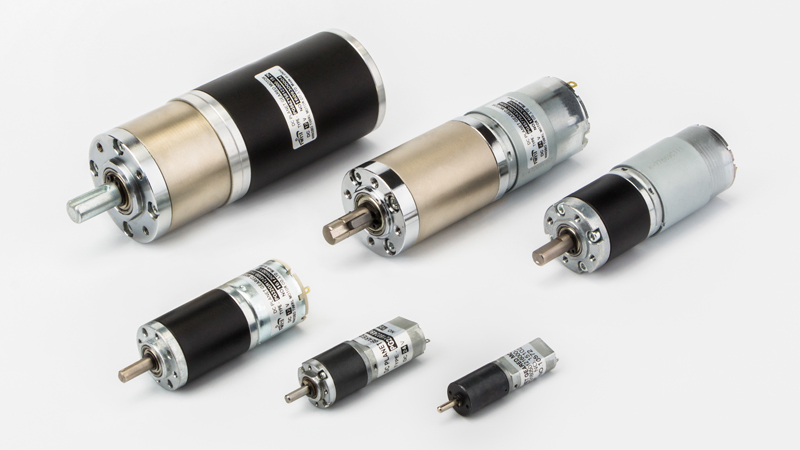
Planetary Gear Motor
Compact coaxial gear motor platforms for applications requiring higher output torque within a limited installation space. Custom shaft, flange, gear ratio and encoder options are available depending on the selected series.
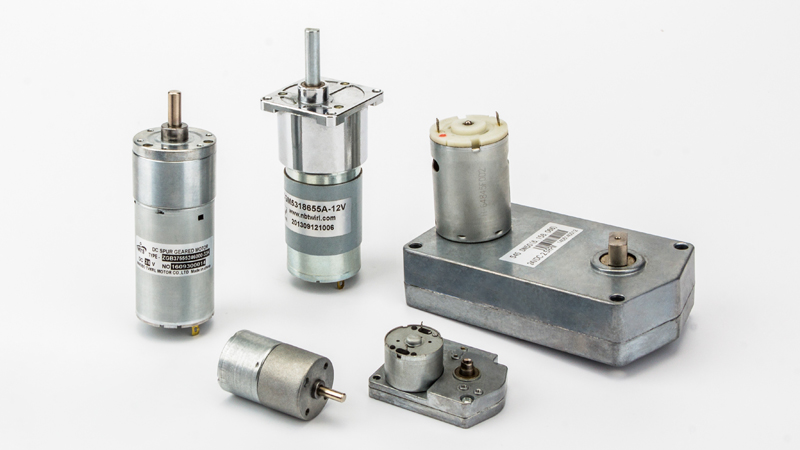
Spur Gear Motor
Parallel-shaft gear motor platforms offering an alternative gear arrangement for applications with different space and performance requirements. Shaft, flange, gear ratio and mounting options can be customized depending on the series.
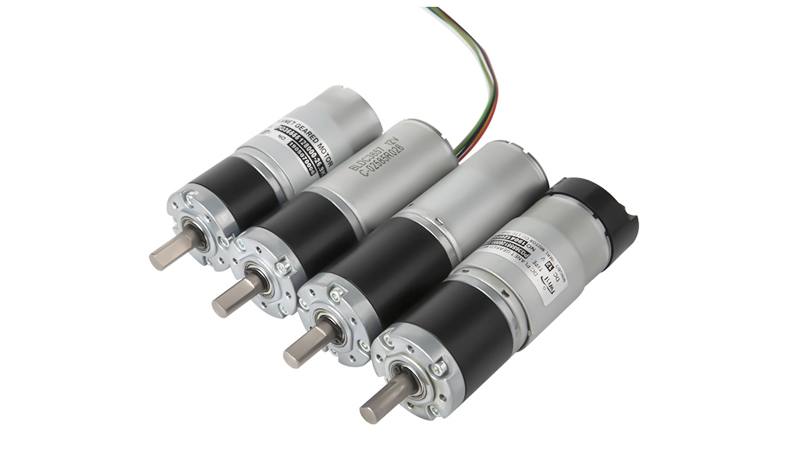
Brushless DC Gear Motor
Brushless DC gear motor platforms with electronic commutation. Often chosen for longer service life and quieter operation, with shaft, flange, ratio and encoder customization available by series.
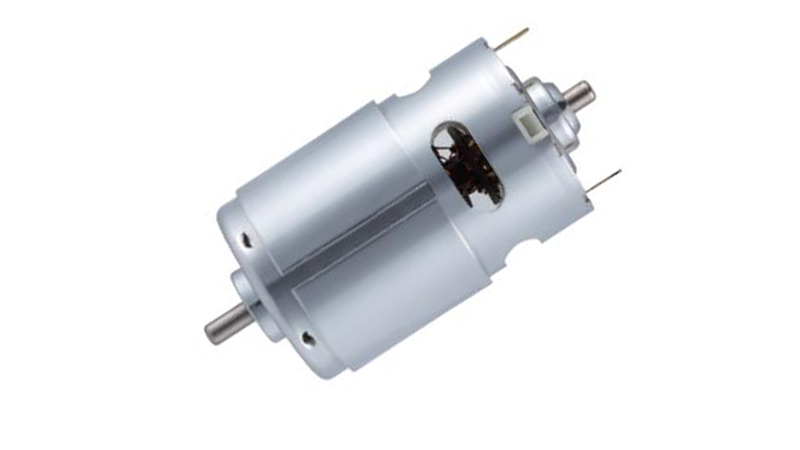
Brushed DC Motor
Brushed DC motor platforms that can be paired with a planetary or spur gearbox. Shaft, flange, ratio and wiring options can be customized depending on the series.
Planetary gear motors are often selected for compact coaxial layouts requiring higher torque, while spur gear motors offer an alternative gear arrangement for applications with different space and performance requirements. The choice between brushed and brushless motors depends on service life, control requirements and operating conditions. We will help you make that call once the load and the space are known.
Where These Drives Are Used
The same platforms appear across very different equipment. These are the application areas we are asked about most; the technical detail still goes into the enquiry, not into the page.
Solar Tracking
Positioning requirements for outdoor solar arrays.
Automotive Actuators
Drive requirements for tailgate, seat and mirror movement.
Lawn Mowers and Outdoor Equipment
Drive requirements for outdoor equipment exposed to dust and vibration.
Ventilation Systems
Continuous-running requirements where low noise matters.
Agricultural Automation
Drive requirements for equipment used in dust and moisture.
OEM Manufacturing and Quality Capabilities
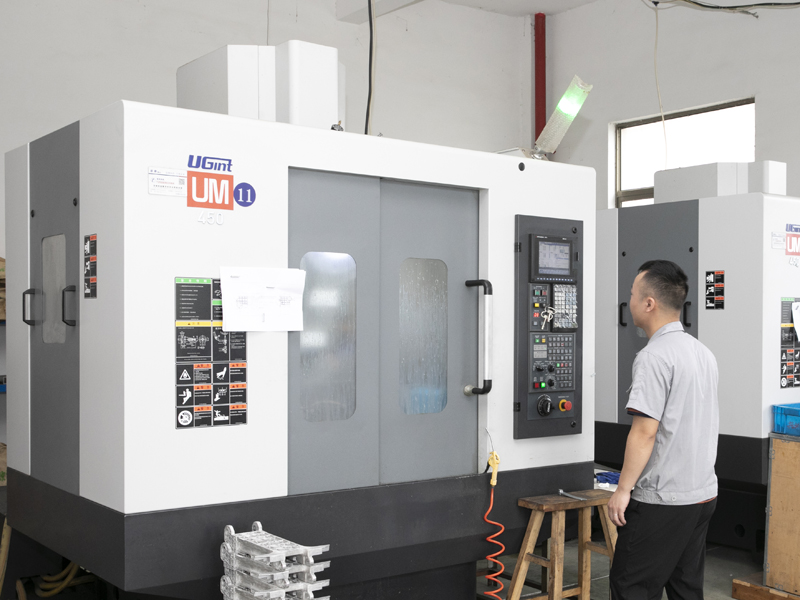
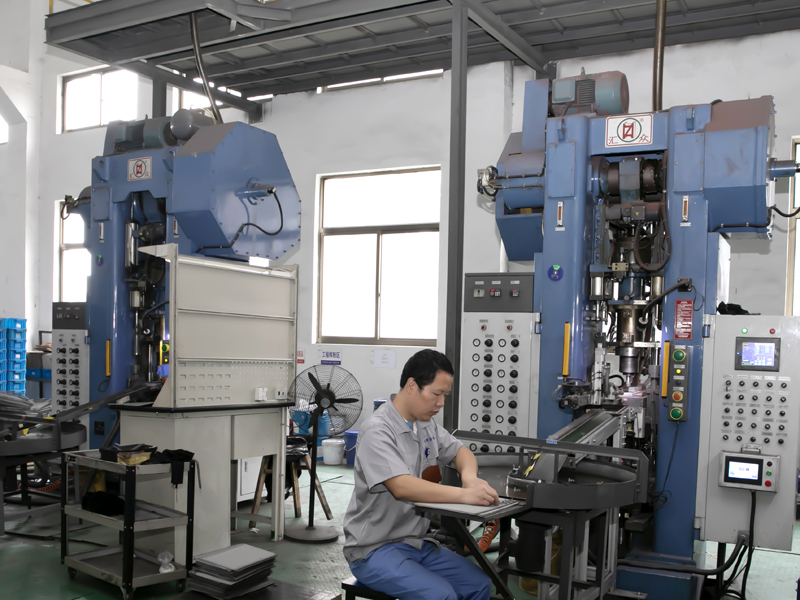
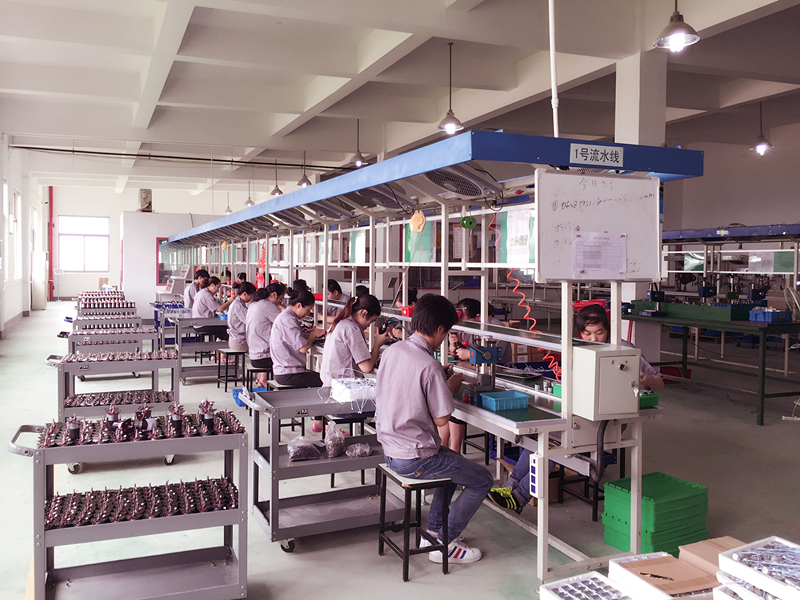
Twirl was established in 2009. We control the parts of the build that decide whether a custom motor repeats in production: tooling, gear cutting, assembly and test. Keeping these in-house is what makes a one-off sample and a production batch behave the same way.
Tooling and Machining
Our factory runs a machining centre, a modulus hobbing machine and a powder metallurgy processing centre, so custom shafts, flanges and gears can be made in-house rather than outsourced. The hobbing machine covers gear cutting and the powder metallurgy centre produces gear and structural parts, which shortens the path from a drawing to a finished gearbox. In-house tooling is also why a modified shaft or flange does not automatically mean a new supplier for every part.
Testing and Inspection
Builds can be checked using a dynamometer, a life-testing instrument, a motor function tester, a noise meter, a high-low temperature chamber and a hardness tester. The applicable tests are agreed during quotation based on the motor configuration and customer requirements.
If your project requires a torque-speed curve, life-test report or defined sampling plan, these requirements can be specified in the quotation. Sample testing and the agreed production test plan help maintain consistency between the approved sample and subsequent production batches.
From Design Review to Production
This is how a custom request moves from a first message to a production part. The sequence is the same for a simple shaft change and a new design; only the depth of the review and the test plan change.
01 · Requirement Review
We read your application, load, target torque and speed, voltage, envelope and quantity. If something is missing we ask for it before quoting, rather than assuming a value.
02 · Engineering Recommendation
Our team proposes a platform and the changes needed, and flags anything outside the published range. You get a recommendation with the trade-offs, not just a price.
03 · Sample Testing
A sample is built to the agreed configuration for you to test fit, torque and noise. This is the step where a drawing becomes a part you can hold.
04 · Production
Once the sample is approved, volume production follows the quoted part number and test plan. Changes after approval are treated as a new review, so the approved sample stays the reference.
Frequently Asked Questions
What can you customize on a DC gear motor?
Voltage, speed, torque, gear ratio, shaft, flange, encoder, brake, wiring and IP level. We confirm which of these apply to your platform during review, because not every option is available on every series.
Can you build a motor based on my drawing or sample?
Yes. Send the drawing or a sample and we will evaluate feasibility, including shaft, flange, materials and rear shaft extensions. Final feasibility is confirmed during engineering review rather than promised from a photo.
Can I test a sample before mass production?
Yes. A sample is produced to the agreed configuration so you can validate fit and performance before mass production. The approved sample and drawings provide the reference for the production part.
How long does sample development take?
Sample development time depends on the platform and the changes requested. We confirm the sample schedule in the quotation rather than promising a date before the review.
What information do I need to request a quote?
Application, target torque and speed (or the load, speed and duty cycle if torque is not known), supply voltage, a drawing, sample or reference photo, and estimated quantity. If you do not have a drawing, a photo and the key dimensions are enough to start.
Start Your Custom DC Gear Motor Project
Send us your application details, target specifications, estimated quantity and any available drawings or reference photos. Our team will review your requirements and recommend a suitable motor platform. If you have larger CAD or drawing files, send them by email after the initial enquiry.